If you are my friend, you know that I credit of the remarkable turnaround of my health, which kept me bedridden for over eight years, to nutritional cleansing. I am on a mission. I believe that everyone who is living, breathing, and eating in this world should be cleansing. The reason? We are so bombarded by toxic elements in our environment, food and air that we have opened ourselves up to all sorts of diseases and cancers.
I hope that all I know and love will view this video .... I think it is one of the most important videos I have ever seen. Please watch because I love you.
.
About Me

- Donna H - LCG Queen
- Former teacher, clinical social worker and now entrepreneur. My focus, no matter what career I am engaged in, has been on helping people. Now I am on an incredible journey to change life in a leaner, cleaner, greener way. I hope you will join me in this transition.
Showing posts with label nutrition. Show all posts
Showing posts with label nutrition. Show all posts
Sunday, March 16, 2014

Thursday, June 6, 2013
Lose the Toxins -- Lose the Fat

I started a deep cleansing program and have subsequently lost 90 pounds of fat in less than five months, while I gained lean muscle mass. Even when I decided to take a break from my active weight loss program and went on maintenance, I was able to maintain that 90 pound loss for a year because I kept cleansing weekly.
I have added back the weight loss aspect of my program, and once again the weight and fat is just melting off.
I have included excerpts from two books that explain this link between toxins and fat.
Please contact me if you would like more information.
From Suzanne Somers book Sexy Forever:
"Obesity rates have more than doubled in the past thirty years. Doesn't this raise the question of why? Toxins make you fat. It's that simple, and that complex. Here's why. Mitochondria are the little powerhouses inside every living cell in your body. They provide power for your cells by creating energy from fats and sugars, thereby driving your metabolism and fueling your whole body.
When toxins enter your body the buildup damages the mitochondria, your cellular power plants, so they no longer work effectively. As a result fats and sugars that aren't being burned for fuel pile up all over the body in the form of extra pounds. Also, without the mitochondria working optimally, you lose your physical energy."
Other excerpts from Suzanne Somer's book:
"Scientific studies show a strong correlations between levels of toxic burden, higher body weight, and the risk of diabetes."
"No matter how the toxins get into our bodies, whether through the lungs, stomach, or skin, they all meet in the liver at some point and from there get sent to the kidneys and colon for elimination, become trapped in bones, muscles, tissues, or other organs, or they get locked in the liver itself, or they get stored away in fat cells!
The fact that many toxins get trapped in fat cells deserves special attention. Fat cells don't get broken down easily, so the toxins literally weigh the body down. If you carry excess fat, burning up that fat releases toxins into the bloodstream for proper removal. As toxins accumulate, they act in unsuspected ways. You begin to experience health problems, like allergies, colds, migraines, and infertility, or major diseases like breast cancer and dementia."
Dr. Walter Crinnion points out in his book, Clean, Green & Lean, that excess fat hiding toxins are making you sick AND fat:
* Allergies"If you're more than 25 pounds above your ideal weight and you're suffering from one or more of the following illnesses, your body is telling you that it's in toxic overload."
* Asthma
* Autoimmune disease (lupus, rheumatoid arthritis, Hashimoto's Thyroidtis
* Bone marrow cancer (lymphomas, leukemia, multiple myeloma)
* Chemical sensitivity
* Chronic fatigue
* Diabetes
* Fibromyalgia
* Infertility
* Parkinsonism
* Obesity
Monday, April 29, 2013
That Doughnut Will Cost You 88 Minutes of Cruches ... and More Bad News!!!
This chart really DOES make me think!!! Now that I am exercising regularly, I am much more careful about my food choices!!

Saturday, April 27, 2013
Why Isagenix? Your Body Will Love You!!! -- Video
I am so grateful that I found Isagrenix. My husband and I have lost a ton of weight, I have turned my poor health around so now I am healtier and more vibrant. We have also supplemented our income to we can live a life of comfort.
If you would like to know a little more about our products and and company, please watch this video. If it sounds like something you would like to know more about write to me at newtraditions99@yahoo.com or log on to my website: http://www.thehealthyhelms.com.
If you would like to know a little more about our products and and company, please watch this video. If it sounds like something you would like to know more about write to me at newtraditions99@yahoo.com or log on to my website: http://www.thehealthyhelms.com.
WHY ISAGENIX?
Contact us Today!!
Monday, April 15, 2013
How Does Cleansing Work?
If you would like to get started with your own Cleansing Routine,
write me at newtraditions99@yahoo.com.
 |
| Poster Image from www.IsagenixHealth.net |
Saturday, April 6, 2013
Nutritional Rebalancing Is NOT a Diet
This is why I have been successful with the Isagenix program.
It really does work!!

For more information go to http://www.thehealthyhelms.com
Friday, April 5, 2013
How to Stop Night Time Eating!!

I was a night-time grazer. I was also an insomniac so I had plenty of time to graze!! I used this information from Isagenix Health to get past the night eating problem and now I have also solved the sleep problem with our Brain and Sleep Support System.
How To Stop Late Night Cravings
It’s 11 p.m. and you’ve just scarfed down a slice of leftover pizza and a few too many Oreo cookies. The satisfying taste of salty and sweet is quickly overcome by guilt, frustration, and what is now an uncomfortably full belly. After eating balanced meals and healthy snacks all day, you are defeated by your late-night craving for junk food
.
How can you avoid this self-defeating debacle? New research shows that eating a high-protein breakfast is the best way to avoid those p.m. cravings.
A study from the University of Missouri-Columbia showed that subjects who ate a high-protein breakfast had increased levels of satiety along with reductions in brain activity responsible for controlling food cravings that lasted into the evening.
The study looked at 20 overweight or obese adolescent females aged 18 to 20 years old. Participants were split into three groups: a high-protein breakfast group that consumed eggs and lean beef, a normal-protein breakfast group that ate ready-to-eat cereal, and a group that skipped breakfast. The breakfasts all consisted of about 350 calories and had similar fat, fiber, and sugar amounts.
The researchers found that those who ate breakfast had increased daily fullness compared to those who skipped, with the high-protein group having the greatest ratings of satiety throughout the day. Additionally, the high-protein group, but not the normal-protein group, had reduced levels of the hormones (ghrelin and peptide YY) that increase appetite compared to the no breakfast group.
With greater satiety and decreased appetite hormones, its no surprise that subjects in the high-protein group reported reduced evening snacking on high-fat foods. As lead researcher Professor Heather Leidy stated in a press release, “Eating a protein-rich breakfast impacts the drive to eat later in the day, when people are more likely to consume high-fat or high-sugar snacks.”
In addition to eating a breakfast rich in protein, here are some breakfast rules to follow so you can avoid late-night binging:
Bump up the Fiber: The faster a meal digests, the sooner you will feel hungry again. Simple sugars found in white flour products like pastries, doughnuts, or bagels can have you battling hunger pangs soon after eating. Make sure your breakfast has at least 5 grams of fiber to keep you feeling fuller, longer.
Don’t Forget the Fat: Fat takes longer to leave the stomach than protein or carbohydrates. Because of this, a little healthy fat can be beneficial in controlling cravings. Of course, a little fat goes a long way so be careful not to go overboard.
The 60-minute Rule: Try to eat your first meal of the day within an hour of waking. The longer a person waits to eat, the greater their hunger may be and it may be more difficult to feel satisfied. This can lead to overeating and making poor food choices. Instead, feed your body with a balanced breakfast and have control over cravings throughout the day.
Want a breakfast that has all the makings of a late-night craving killer? Look no further than Isagenix IsaLean Shakes with 24 grams of high-quality protein, 8 grams of fiber, and a healthy balance of fat, IsaLean Shakes will have you feeling satisfied and confident with your food choice. Also, the ease and convenience of IsaLean Shakes will help you stick to the 60-minute rule so breakfast doesn’t turn into lunch. Say “no” to tempting junk food at night by starting your day off right with Isagenix.
Reference: Leidy HJ, Ortinau LC, Douglas SM, Hoertel HA. Beneficial effects of a higher-protein breakfast on the appetitive, hormonal, and neural signals controlling energy intake regulation in overweight/obese, “breakfast-skipping,” late-adolescent girls. Am J Clin Nutr 2013;97:677-88. doi: 10.3945/ajcn.112.053116
To find out more about our IsaLean Pro Shakes (with 36g protein), IsaLean Shakes (with 24g protein) or our Brain and Sleep Support System go to our website The Healthy Helms.
Wednesday, March 27, 2013
Yo-Yo Dieting? -- You Need High Quality Protein

Here is a great article from Isagenix Health.
You know how it is with regular dieting—your long-lost skinny jeans make a temporary reappearance only to be retired to the back of your closet six months later. This frustrating scenario of weight cycling is all too familiar for most people.
Although decreased motivation and will-power greatly contribute to “falling off the wagon”, weight regain is also influenced by biological changes in the body in response to decreased intake of energy or calories. The main biological reason for weight regain is a slowing metabolism. A reduction in calorie intake can make the body become very efficient and work to conserve energy. Unfortunately, this means you are burning fewer calories. Loss of lean tissue (such as muscle) rather than fat mass during weight loss is also to blame for a lower metabolic rate (more on this below).
In a world where yo-yo dieting has become the norm, how does one keep lost pounds off for good?
New research carried out by a group of scientists from the Netherlands reveals that a diet higher than normal in protein may be the key to sustaining permanent weight loss (1). Seventy-two overweight and obese men and women took part in the study, which compared the effects of two reduced-calorie diets after weight was previously lost, the only difference between the diets being that one counted as high protein intake (1.2 grams of protein per kilogram of body weight per day) and the other as normal protein intake (0.8 grams of protein per kilogram of body weight per day). After six months, the group eating more protein was found to retain greater muscle mass and a higher rate of metabolism, helping to better keep that lost weight from returning.
Previous studies investigating the effect of energy-restricted, high protein diets on weight maintenance have reached similar conclusions (2). The fat-fighting power of protein lies in its ability to keep energy expenditure elevated as well as curb hunger despite reduced calorie intake.
Rev Up Your Metabolism with Protein
Energy expenditure, or the number of calories burned by the body, is greatly influenced by basal metabolic rate (BMR), which is the amount of energy, or rate of metabolism, required to support basic body functions when your body is at rest.
The greatest contributor to BMR is fat-free mass. Fat-free mass is largely made up of muscle, which is very energy demanding. Even when no work is being performed (such as when you are sleeping), muscle requires energy just to exist. Muscle cells and their components are constantly using calories to rebuild what is broken down during normal protein turnover. A higher protein diet not only increases energy-demanding protein synthesis and turnover, but has also shown to better preserve muscle during caloric restriction (1, 2). Keeping muscle mass and turnover rates high results in a higher BMR, faster metabolism, and greater energy expenditure.
The thermic effect of food (TEF) is another factor that affects energy expenditure and refers to the amount of energy needed to break down, absorb, and digest food. The TEF differs between nutrients, with protein requiring more calories for digestion and metabolism than both fat and carbohydrate combined. Specifically, 0 to 3 percent of the calories obtained from fat are used for fat digestion, 5 to 10 percent of calories from carbohydrate are used for carbohydrate digestion, and 20 to30 percent of calories from protein are used for protein digestion (2). This means that protein requires a substantial amount of calories for the body to metabolize and use it compared to the other macronutrients. Simply by eating more protein in place of carbohydrate or fat, a person will burn more calories.
Feel Fuller, Longer with Protein
Successfully committing to a reduced calorie diet can be difficult when you are bombarded by cravings and hunger pangs. Ravenous hunger will only encourage overeating and weight regain. Research has shown higher protein diets to be superior to low or standard protein diets in causing a feeling of fullness, thereby leading to lower calorie intake (2). A reduced calorie diet will lead to greater use of existing fat stores, as a person quickly burns through the energy provided by the food they consume, as well as the carbohydrate stored in the body (glycogen). This increased reliance on fat for fuel has been suggested to reduce appetite.
Protein may also boost satiety by sending hormonal messages to the brain signaling fullness. When protein is eaten, sensors located in the gut are activated. Hormones such as glucagon are released, sending a message to the brain saying, “I’m full!” (3).
Isagenix: Making the higher protein lifestyle easy
Sustaining weight loss over the long term is challenging but not impossible. A higher protein diet offers numerous metabolic advantages that will not only help a person lose weight, but may also prevent regaining pounds, or worse, surpassing your starting weight.
Isagenix offers a variety of convenient and delicious higher protein meals and snacks that can aid weight maintenance efforts. Incorporating these Isagenix snacks and meal replacements in your reduced calorie diet will not only help you get into those skinny jeans, but stay in them, too.
For more information about Isagenix, contact me at newtraditions99@yahoo.com or go to my website The Healthy Helms.
References:
1) Soenen S, et al. Normal Protein Intake Is Required for Body Weight Loss and Weight Maintenance, and Elevated Protein Intake for Additional Preservation of Resting Energy Expenditure and Fat Free Mass. J Nutr. 2013 Feb 27. [Epub ahead of print]
2) Westerterp-Plantenga MS, et al. Dietary protein – its role in satiety, energetics, weight loss and health. Br J Nutr. 2012 Aug;108 Suppl 2:S105-12. doi: 10.1017/S0007114512002589.
3) Belza A, et al. Contribution of gastroenteropancreatic appetite hormones to protein-induced satiety. Am J Clin Nutr. 2013 Mar 6. [Epub ahead of print]
Tuesday, March 26, 2013
Benefits of Oregano Tea plus Recipe
I am starting to plant my herbs in my greenhouse. Oregano is one of my favorite herbs for cooking, but I never thought of using it as a tea. After seeing this poster with all the benefits I think I am going to brew some ... it should be an interesting taste.
This idea is from Edible Harmony.

This idea is from Edible Harmony.

Wednesday, March 20, 2013
Exercising but Not Losing Fat? Maybe This is the Problem by Dr. Michael Colgan
Dr Michael Colgan -- 14 March 2013
from Isagenix Nutritional Sciences
One of my fat loss clients, has been steadily losing about one pound of fat per week on our nutrition and exercise program, 32 lbs overall. Eager to make a Size 4 for the summer, she thought she wasn’t losing enough. So she joined another gym and hired a trainer.
First week he had her jogging on the treadmill, a hard puff-and-pant exercise for an overweight girl who never jogged. He told her she had to keep going for 30 minutes or she would not lose any fat. Then she had to do an aerobics class for 30 minutes. But she was allowed an oatmeal muffin and some nice organic fruit juices to keep her going. She did both bouts of exercise for five days for one week, then came back to me exhausted, pleading that she had gained weight, and that perhaps ours was the best way.
As often occurs, there were several things wrong with the gym exercise she was given. First, the treadmill jogging was anaerobic for her. That is, she was puffing and panting, indicating a shortage of oxygen. Bodyfat is calorie dense. At 9 calories per gram it needs plentiful oxygen to enable the body to burn it. All endurance athletes know this well. Their VO2 max is the maximum aerobic effort they can make and still burn fat. Any greater intensity and they will turn anaerobic, stop burning fat, quickly burn up all their sugar, and hit the dreaded “wall”.
Second thing wrong; the trainer didn’t give her a diet beyond telling her some healthy things to eat, and he encouraged her to take fruit juice during exercise to keep her going. She told me she also had an oatmeal muffin and juice at the gym beforehand, “or I just couldn’t face it”. We estimated that she had at least 400 calories before starting and another 200-400 during the exercise, about 600-800 extra calories per day, a total of 3,000 – 4,000 extra calories for the five workouts. Bottom line. Any calories you put in your stomach before or during exercise to lose fat, will be preferentially used first by the body. So she was setting herself up to grow plump as a goose.
How much fat did she burn? If you could burn fat perfectly, (remember, no calories in the stomach and no panting) aerobic treadmill work or aerobics classes can use up to 200 calories of fat in an hour. So, if everything was perfect, she could burn a total of 1000 calories (about 4 ounces of fat) over the 5 workouts. Because of the mistakes in her program, likely she burned half that, probably only 500 calories (only 2 ounces of fat loss) over the whole 5 workouts. Meanwhile she ate an extra 3,000 – 4,000 calories, at least half of which would be turned to fat (6-8 ounces of fat gain) just to be able to do the workouts.
For comparison, steady housework uses about 130 fat calories per hour. It’s a good level of effort for burning fat, and costs nothing. Because you are in proximity to food, however, you have to resist eating anything, or you switch to burning mainly sugar. Two hours housework a day will burn far more fat than most gym workouts. Let’s consider perfect fat burning again: 2 hours housekeeping per day x 6 days a week = 12 hours. Twelve hours at 130 calories = 1,560 calories (6 ounces of fat loss) per week. Beats her gym workouts – no contest.
Whenever I see nonsensical gym programs for fat loss I turn back to the rigorous meta-analysis of 25 years of controlled research on exercise and fat loss published in The International Journal of Obesity. These were all medium intense gym programs for fat loss, supervised and motivated by university trainers. They counted only people who attended regularly for 4-6 hours per week. Average weight loss over all the studies was 6.4 lbs in 15 weeks. That’s an average loss of only 7 ounces a week.(1)
The researchers also examined studies that added a reasonable nutrition program to the exercise. Results got much rosier. The same meta-analysis examined the best of the exercise-plus-diet studies over 25 years. In 15 weeks, on a good diet plus 4-6 hours per week in the gym, subjects lost an average of 24.2 lbs. That’s a loss of 1.6 lbs per week.(1)
So, if we compare the exercise alone groups (loss of 6.4 lbs) with the exercise-plus-diet groups (loss of 24.2 lbs), adding the nutrition resulted in a loss of 17.8 lbs of fat. Now you know, no matter what anyone tells you, fat loss is mostly dependent on what and when you eat.
My client is back on her diet track now. After torturing herself very expensively in the gym for 5 hours, our body composition machine showed a gain of 4 lbs, about 3 lbs of water because her body was swollen from the effort, and about 1 lbs of fat. By working out until (in her own words), “my legs turned to Jello”, she had wiped out a week of the fat loss she was getting from a simple diet of two shakes and one meal a day. As I have written many times before, the usual exercise program is excellent at removing fat – but only from your wallet.
If you want to learn more secrets of weight loss go to The Healthy Helms Website.
1. Miller WC, Koceja DM Hamilton EJ. A meta-analysis of the past 25 years of weight loss research using diet, exercise or diet plus exercise intervention. Int J Obesity, 1997;21:941-947.
from Isagenix Nutritional Sciences
 |
| Image from compareweightlossprogram.com |
First week he had her jogging on the treadmill, a hard puff-and-pant exercise for an overweight girl who never jogged. He told her she had to keep going for 30 minutes or she would not lose any fat. Then she had to do an aerobics class for 30 minutes. But she was allowed an oatmeal muffin and some nice organic fruit juices to keep her going. She did both bouts of exercise for five days for one week, then came back to me exhausted, pleading that she had gained weight, and that perhaps ours was the best way.
As often occurs, there were several things wrong with the gym exercise she was given. First, the treadmill jogging was anaerobic for her. That is, she was puffing and panting, indicating a shortage of oxygen. Bodyfat is calorie dense. At 9 calories per gram it needs plentiful oxygen to enable the body to burn it. All endurance athletes know this well. Their VO2 max is the maximum aerobic effort they can make and still burn fat. Any greater intensity and they will turn anaerobic, stop burning fat, quickly burn up all their sugar, and hit the dreaded “wall”.
Second thing wrong; the trainer didn’t give her a diet beyond telling her some healthy things to eat, and he encouraged her to take fruit juice during exercise to keep her going. She told me she also had an oatmeal muffin and juice at the gym beforehand, “or I just couldn’t face it”. We estimated that she had at least 400 calories before starting and another 200-400 during the exercise, about 600-800 extra calories per day, a total of 3,000 – 4,000 extra calories for the five workouts. Bottom line. Any calories you put in your stomach before or during exercise to lose fat, will be preferentially used first by the body. So she was setting herself up to grow plump as a goose.
How much fat did she burn? If you could burn fat perfectly, (remember, no calories in the stomach and no panting) aerobic treadmill work or aerobics classes can use up to 200 calories of fat in an hour. So, if everything was perfect, she could burn a total of 1000 calories (about 4 ounces of fat) over the 5 workouts. Because of the mistakes in her program, likely she burned half that, probably only 500 calories (only 2 ounces of fat loss) over the whole 5 workouts. Meanwhile she ate an extra 3,000 – 4,000 calories, at least half of which would be turned to fat (6-8 ounces of fat gain) just to be able to do the workouts.
For comparison, steady housework uses about 130 fat calories per hour. It’s a good level of effort for burning fat, and costs nothing. Because you are in proximity to food, however, you have to resist eating anything, or you switch to burning mainly sugar. Two hours housework a day will burn far more fat than most gym workouts. Let’s consider perfect fat burning again: 2 hours housekeeping per day x 6 days a week = 12 hours. Twelve hours at 130 calories = 1,560 calories (6 ounces of fat loss) per week. Beats her gym workouts – no contest.
Whenever I see nonsensical gym programs for fat loss I turn back to the rigorous meta-analysis of 25 years of controlled research on exercise and fat loss published in The International Journal of Obesity. These were all medium intense gym programs for fat loss, supervised and motivated by university trainers. They counted only people who attended regularly for 4-6 hours per week. Average weight loss over all the studies was 6.4 lbs in 15 weeks. That’s an average loss of only 7 ounces a week.(1)
The researchers also examined studies that added a reasonable nutrition program to the exercise. Results got much rosier. The same meta-analysis examined the best of the exercise-plus-diet studies over 25 years. In 15 weeks, on a good diet plus 4-6 hours per week in the gym, subjects lost an average of 24.2 lbs. That’s a loss of 1.6 lbs per week.(1)
So, if we compare the exercise alone groups (loss of 6.4 lbs) with the exercise-plus-diet groups (loss of 24.2 lbs), adding the nutrition resulted in a loss of 17.8 lbs of fat. Now you know, no matter what anyone tells you, fat loss is mostly dependent on what and when you eat.
My client is back on her diet track now. After torturing herself very expensively in the gym for 5 hours, our body composition machine showed a gain of 4 lbs, about 3 lbs of water because her body was swollen from the effort, and about 1 lbs of fat. By working out until (in her own words), “my legs turned to Jello”, she had wiped out a week of the fat loss she was getting from a simple diet of two shakes and one meal a day. As I have written many times before, the usual exercise program is excellent at removing fat – but only from your wallet.
If you want to learn more secrets of weight loss go to The Healthy Helms Website.
1. Miller WC, Koceja DM Hamilton EJ. A meta-analysis of the past 25 years of weight loss research using diet, exercise or diet plus exercise intervention. Int J Obesity, 1997;21:941-947.
How to Reduce Your Body Fat Percentage
 |
| Image from LiveStrong.com |
Click HERE for presentation.
Thursday, March 14, 2013
Why I LOVE Love Apples (Tomatoes) plus Recipe
I love using tomatoes in my cooking which is evident in how many tomato varieties I have already planted this year. Here is a great poster from Farmers Market which explains good reasons that you should love tomatoes too! Followed by a great recipe for Baked Tomatoes Oregano.


Baked Tomatoes Oregano
Prep Time: 15 minutes Cook Time: 20 minutes Serves: 4
 |
| Image from AllRecipes.com |
Note: Ripe tomatoes are baked with Romano cheese, fresh bread crumbs, garlic and herbs. It reminds me of pizza without the crust! I love this simple recipe on nights we are grilling.
Ingredients:
4 large ripe tomatoes, sliced ¼ inch thick
1/8 cup grated Romano cheese
1/2 cup fresh bread crumbs
1 clove garlic, minced
2 sprigs fresh parsley, chopped
Salt and pepper to taste
1/2 teaspoon dried oregano
1 Tablespoon olive oil
Sprig of basil
1/8 cup grated Romano cheese
1/2 cup fresh bread crumbs
1 clove garlic, minced
2 sprigs fresh parsley, chopped
Salt and pepper to taste
1/2 teaspoon dried oregano
1 Tablespoon olive oil
Sprig of basil
Directions:
1. Preheat oven to 400 degrees F. Coat a shallow baking dish with cooking spray.
2. Place tomato slices close together in prepared baking dish. Sprinkle with cheese, bread crumbs, garlic, parsley, salt, pepper, and oregano.
3. Bake for 20 minutes in the preheated oven, or until cheese is lightly toasted.
4. Garnish with a sprig of basil.
Nutrition Info: Calories: 110 Total Fat: 5g Cholesterol: 4mg Sodium: 103mg
Total Carbs: 14g (Dietary Fiber 3g) Protein: 3g
Total Carbs: 14g (Dietary Fiber 3g) Protein: 3g
Wednesday, March 13, 2013
My Spicy Veggie Fry Spice - Recipe
Fries are not just for potatoes any more. Since Tom and I have started growing our own produce, I have discovered you can make "fries" out of all kinds of veggies. I've used sweet potatoes, carrots, parsnips, and lot of different squashes. The other great thing about my veggie fries ... is that they are not "fried" at all ... they are baked!! (Taking out TONS of calories and fats).
I like my fries "spicy" so I have come up with what I consider a great seasoning for my veggie creations.
I start off by setting the oven temperature to 425 degrees F.
 The next step is to cut up the veggies (in this case I am using Georgia Jet yams/sweet potatoes).
Then I mix the seasoning which consists of:
1/2 teaspoon fresh ground salt (I use Himalayan Salt)
1/2 teaspoon ground cumin
1/2 teaspoon chili powder
1/2 teaspoon sweet paprika
1/4 teaspoon fresh ground black pepper
 Here is a little time saving tip. I mix up 3-4 times the amount of seasoning that I need and put it into a shaker bottle. Not only does it save time when I am trying to make dinner, it also makes it easier to evenly distribute the seasoning over the "fries."
Next I lightly spray the vegetables with an olive oil cooking spray (like Pam), and I shake some of the seasoning onto the veggies.

Pop them into the pre-heated oven and bake for 20-25 minutes (turning once after 10 minutes).
Take out and enjoy. I like to serve sweet potato fries with light ranch dressing for dipping.
Let me know what you think?
I like my fries "spicy" so I have come up with what I consider a great seasoning for my veggie creations.
I start off by setting the oven temperature to 425 degrees F.

Then I mix the seasoning which consists of:
1/2 teaspoon fresh ground salt (I use Himalayan Salt)
1/2 teaspoon ground cumin
1/2 teaspoon chili powder
1/2 teaspoon sweet paprika
1/4 teaspoon fresh ground black pepper

Next I lightly spray the vegetables with an olive oil cooking spray (like Pam), and I shake some of the seasoning onto the veggies.

Pop them into the pre-heated oven and bake for 20-25 minutes (turning once after 10 minutes).
Take out and enjoy. I like to serve sweet potato fries with light ranch dressing for dipping.
Let me know what you think?
Tuesday, March 12, 2013
Nutrition & Fitness Apps

The ONLY reason I have a mobile phone is because I am in LOVE with apps (I actually HATE talking on the phone!!) Here are “8 Health and Fitness Apps for Couch Potatoes” by Anne Karasek.
Apps to get you moving
iTreadmill – $1.99 — No gym? No excuses. iTreadmill is a virtual treadmill (hence the name) that tracks everything a treadmill can track during use, including distance, current pace, average pace, current speed, average speed, calories, steps per minute, step count and elapsed time. Think of this app as a treadmill right in your hand. It also allows you to track your run history; shows graphs of your runs for motivation and even set goals for yourself. You don’t have to be a runner to use this app; many use iTreadmill for walking around the neighborhood, local malls or even running around the park.
C2K – Free — Imagine being able to run a 5k in just eight short weeks. All it takes is 30 minutes a day, three days a week. This app is amazing and totally fool-proof to get you there. With C2K, you basically have a personal trainer right in your hand as the app has an audio coach that alerts you when it’s time to run and when it’s time to walk. I’ve completed the first two weeks of the program, and I love it. It starts with a brisk five-minute warm up, alternates between 60 seconds of jogging and 90 seconds of brisk walking for 20 minutes, and finishes with a five-minute cool down. As the workouts go along, you begin to walk less and run more, and it is a simple way to build your running capacity. This app also lets you jam out to your own music, and you can even alternate playing pump up songs during the running part and more chill songs during the walking part.
Runtastic – Free — Who wouldn’t want a personal cheerleader in her pocket? (OK, maybe not everyone; that would get annoying.) But if that’s your thing, Runtastic gives you live cheering during your workouts to help you stay motivated. Runtastic is your personal tracking app, and all-in-one exercise app for running, biking and other cardio activities. With a built in GPS, you can map out your activities, as well as track distance, time, speed, calories and pace. Haven’t you always wanted to know how long a walk from Fenway to Newbury Street really is, and how many calories you’ve burned on your way to get fro-yo? Well, now with this app, you can track it, burn calories and set goals.
Pocket Yoga – $2.99 — Get your Zen on anywhere and anytime. As a yoga-skeptic, I’ve been officially converted by using this app. Pocket Yoga allows you to do yoga at your own pace and on your own time. It features three different practices, three different difficulty levels and three different lengths of time for your workout, for a total of 27 different yoga sessions. Pocket Yoga also features detailed voice instructions and visual instructions to guide you through every pose, including breathing techniques. Pocket Yoga does feature soothing default music, but if you feel like listening to Jay Z while you Zen out, you can do that as well.
FitBit – Free; Device: $100 — This app is a little more of a commitment because first you need to purchase a FitBit monitor called, “The One,” priced at $100. If you are serious about getting healthy, this app is serious to get you there by turning health into a lifestyle for you. This little device measures your sleep cycle and helps you learn how to sleep better. During the day, it tracks your steps, distance, calories burned and even stairs climbed. By getting the free FitBit app, you can track your progress via the FitBit on your phone.
Apps as nutrition trackers
MyFitnessPal – Free — Nobody loves to track calories, but unfortunately, spring is coming, and we can no longer hide in our oversized coats and sweaters.With MyFitnessPal, you can track what you eat digitally. I’ve used MyFitnessPal for the past four years, and it helps me know how many calories I’m eating while also tracking my exercise and allowing me to set weight loss goals. It has a database of over 2 million foods and 350 exercises, and it allows you to create your own foods and exercises if you can’t find them in their database. You can also track with friends to motivate yourself because, according to MyFitnessPal, members who diet with friends lose three times more weight on average.
LoseIt! – Free — LoseIt! is another app that tracks your food input and exercise. It has a database of food and exercise activities, which allows you to accurately track what you eat. You can also earn badges for your successes and share your progress on Twitter and Facebook. Like MyFitnessPal, it creates a report on protein, fats, carbohydrates and more. It also lets you see how you’re doing with your weight loss goals.
LiveStrong – Lite free; full $2.99 — Although Lance may have let us down, the LiveStrong food and exercise app won’t. Created with MyPlate in mind (the new version of the food pyramid), its focus is on helping you eat a balanced and nutritional meal. It takes into account your age, gender and activity level, allowing you to customize your goals for nutrition or weight loss.
Tuesday, February 26, 2013
Saving Herbs for Cooking
Is this a great idea for saving fresh herbs, or what? The pictures show putting the herbs into ice cube trays and then filling the tray with organic olive oil, then putting the tray into the freezer. You could also probably just put them into the refrigerator and let the oil solidify if you are going to be using the cubes within a few days.
I bet you could also fill the trays with coconut oil or butter (if you are not counting the calories) and have a great starter for cooking or sauteing.

I bet you could also fill the trays with coconut oil or butter (if you are not counting the calories) and have a great starter for cooking or sauteing.

This idea from www.organic-gardening.com
Sunday, February 3, 2013
Why I Love Kale + Recipe for Kale Chips
I have never been much of a veggie eater ... brought up on canned corn, peas and green beans with a few potatoes tossed in for good measure. Since Tom and I have been growing our own vegetables, I have really found many new favorites. (Nothing tastes better than home grown!!) Recently I discovered kale ... and below is a chart that shows all the wonderful benefits of that great leafy green treasure!!! (Also a recipe for kale chips!!)

Crispy Kale "Chips"
Recipe courtesy Melissa d'Arabian4 servings.Ingredients
1 head kale, washed and thoroughly dried
2 tablespoons olive oil
Sea salt, for sprinkling
2 tablespoons olive oil
Sea salt, for sprinkling
Directions
Preheat the oven to 275 degrees F.
Remove the ribs from the kale and cut into 1 1/2-inch pieces. Lay on a baking sheet and toss with the olive oil and salt. Bake until crisp, turning the leaves halfway through, about 20 minutes. Serve as finger food.
Wednesday, November 28, 2012
University Study Finds Isagenix Superior to Leading “Heart Healthy” Diet
September 20, 2012 IsagenixHealth.net
 |
| Dr. Krista Varaday University of Illinois Chicago College of Applied Sciences |
Dr. Krista Varady discusses clinical research on Isagenix products.
The highly anticipated results are in—Isagenix products are superior to a leading “heart healthy” dietary plan for weight loss and visceral fat loss. The manuscript has been submitted to two peer-reviewed journals and is still under review; however, you can read more details about the study on our clinical research summary and marketing flyer.
Krista Varady, Ph.D., the lead investigator of the study, is a prolific researcher at the University of Illinois at Chicago’s College of Applied Sciences with more than 30 peer-reviewed research publications. She has a Ph.D. in nutrition from McGill University—one of the top universities in Canada. Dr. Varady has devoted much of her time to investigating the ability of weight-management strategies to decrease cardiovascular disease risk and is one of the pioneers in research on alternate-day and intermittent fasting.
Dr. Varady’s research was presented in August at the 10th annual Isagenix Celebration in Phoenix. Eager to share the exciting results, Dr. Varady answered questions from Isagenix Chief Science Officer Suk Cho, Ph.D.:
Q: What did you think when you tried Isagenix?
A: I always try things before I make my subjects do it. I used Isagenix for three weeks in January before we began the study. I didn’t want to lose a ton of weight, but I did want to see if I could lose a few pounds with it. The easy of use was great—no dishes at breakfast or lunch; you didn’t even need to have milk at home. I went out and bought a few shake products to compare it to and I’m not sure what you guys do, but the consistency is like a smoothie. The other shakes were clumpy and it made them less appealing.
Q: What else impressed you about Isagenix products?
A: I was impressed by the Cleanse Day and the high-protein IsaLean® Shake. All the ingredients actually seemed wholesome. I had thought the shake would be a high-sugar beverage, but I found it to be really nutritionally complete.
Q: What attracted you to collaborate with Isagenix on research using their products?
A: The main thing was that Isagenix incorporates fasting while on Cleanse Days. I find that really novel. If you look at other meal-replacement diets, they never really incorporate fasting or cleansing. Usually it is a shake for breakfast and a shake for lunch, but they don’t use all the other products Isagenix uses. I like that it is a multifaceted approach. You are also using supplements that may provide metabolic benefit and protect against free radicals—I thought that was really neat too, but the main thing was that there was a Cleanse Day every week because I am really interested in fasting research.
Q: What can you tell us about the study’s results?
A: Our main finding was that weight loss was actually greater in the Isagenix group. On average they lost 3.9 kg, so that works out to be around 9 pounds or so. Obviously, some lost more and some less, but the Isagenix group lost 3 pounds more on average than the other diet. We also saw those changes with fat mass. With Isagenix, we saw slightly greater reductions (although not significant) in fat mass. Neither group lost a significant amount of lean mass, which is great because you want to maintain your muscle mass to keep your metabolic rate higher and that allows you to burn more calories per hour.
Q: What are the results for visceral fat (fat that surrounds the organs)?
A: Even though it wasn’t statistically significant between groups, we found that there was a much greater reduction in visceral fat in the Isagenix group—about twice as much. They lost 0.7 kg, about 2 pounds. I find that amazing—they lost 2 pounds around their organs—that’s a lot!
Q: What other part of this study’s results do you find most exciting or intriguing?
A: What I found most intriguing at first was the adherence of the Isagenix group; they seemed to adhere better because of the convenience factor of the Isagenix system. Also, the Isagenix group lost more weight and more fat (especially visceral fat); and the blood chemistry looked wonderful.
Q: What other personal observations have you made about the Isagenix products and how they affect subjects?
A: Isagenix people just seemed happier. Also, the satiety (or fullness) aspect; people didn’t feel motivated to binge after a shake or cheat on the diet because they really did find those shakes quite filling, so I was pretty impressed with that. That is the main reason that I am even testing out these diets—to find diets that people will actually do and adhere to over the long term. They liked the taste of the shake and just in terms of the easiness too, they said small things like “there were less dishes to wash” and “for breakfast all you really have to do is keep the blender clean, there’s not that much prep involved and it is a portable system.” But those are actually really important things—if a diet is hard to do, people aren’t going to do it for very long. So making it easy, making it easy to clean up after—all those things add up for long term weight loss.
Q: You had some products left over after the study and people asked you for them, right?
A: Yeah, I had 3 boxes left of the shakes and I have never seen women diving in there, fighting with each other. They were all over each other. Those were gone pretty quickly after we opened them up!
Monday, October 29, 2012
The Difference Between Being Fit & Fat
"One of the first things successful people realize is the old adage, "if it is to be, it is up to me." This doesn't mean that you do it all alone. It simply means that you take responsibility for your life and your career." -- Jim Rohn

Thursday, September 20, 2012

Sunday, September 16, 2012
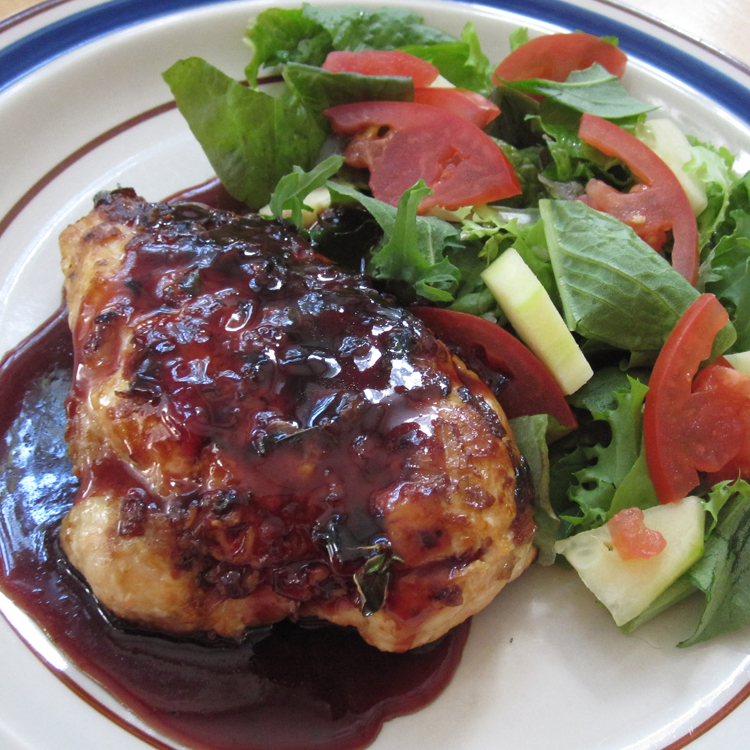
Herbed Chicken w/Raspberry Balsamic Sauce (Recipe)
I served this for company dinner last night ... and it was a major "hit" with everyone. I didn't tell them how easy this was to make or that it was only 230 calories. The prep took me about 5 minutes, and it took the chicken about 20 minutes to cook up to the proper temp!! This is a perfect recipe for a summer dinner.
Herbed Chicken with Raspberry Balsamic Sauce
1 teaspoon olive oil
1/2 cup red onions, chopped
1 Tablespoon garlic, minced
1 pinch red pepper flakes
1/2 teaspoon dried thyme OR 1-1/2 tsp fresh thyme
1/2 teaspoon salt, divided
4 (4-6oz) boneless skinless chicken breasts
1/3 cup seedless raspberry preserves (I used low sugar raspberry preserves)
2 Tablespoons Balsamic vinegar
1/4 teaspoon black pepper
1. Heat oil in a large nonstick skillet over medium high heat, add onion and garlic and saute 5 minutes.
2. Sprinkle thyme and 1/4 teaspoon of salt over chicken.
3. Add chicken to the skillet; saute 6 minutres on each side (or until internal temperature reaches 170 degrees).
4. Remove chicken from skillet and keep warm.
5. Reduce heat to medium, add 1/4 teaspoon salt, preserves, vinegar, and pepper to skillet, stirring until the preserves melt.
6. To Serve: Spoon sauce over chicken and serve immediately Or return chicken to pan and coat chicken evenly, serve immediately.
Nutritional Information: (1 serving = 1 chicken breast with sauce)
Calories: 229.1
Total Fat: 4.1g (Sat. Fat 0.8g)
Cholesterol: 72.5
Sodium: 433.5mg
Total Carbohydrates: 21.7g (Dietary Fiber 0.7g, Sugars 14.9g)
Protein: 24.4g
Notes:
1. If you want a thicker sauce, let it cool slightly before pouring it over the chicken.
2. I am going to try this with other no-sugar preserves to see how it works: apricot, blackberry, peach.
3. This recipe is also diabetic friendly..
Subscribe to:
Posts (Atom)