About Me

My photo
Former teacher, clinical social worker and now entrepreneur. My focus, no matter what career I am engaged in, has been on helping people. Now I am on an incredible journey to change life in a leaner, cleaner, greener way. I hope you will join me in this transition.
Showing posts with label mood. Show all posts

Sunday, March 17, 2013

Sweet Dreams Herbal Dream Pillow

I used to have a lot of trouble falling and staying asleep.  I would only sleep 3-4 hours a night if I slept at all.  That has all changed (ask me about my super sleep potion and Triple-B!).  Now that I am sleeping I want to have sweet dreams.  A friend of mine gave me a recipe for a "sleepy-time dream pillow."  Here is the recipe for you.


Possible Base Ingredients:

  • Anise – Repels nightmares, but be sure to use sparingly.
  • Calendula – Used to induce restful sleep.
  • Catnip - Increases restful sleep. Especially good for babies and children.
  • Cedar – Repels bad dreams.
  • Chamomile – Used for relaxation and pleasant dreams.
  • Hops – Aids in restful sleep and healing.
  • Jasmine – The dried flowers are useful for romantic and erotic dreams, especially for women.
  • Lavender – These flowers have the ability to ease stress, soothe, and relax. A simple pillow made only with lavender can be simply perfect.
  • Lemon Balm – A known for it’s ability to reduce anxiety and insomnia. Also valuable for relieving headaches and stress.
  • Mugwort - Protection.
  • Mullein – Guards against nightmares.
  • Rose petals – Adds loving and peaceful thoughts to dreams.
  • Rosemary - Repels bad dreams, but use sparingly due to the strong scent.           

  • Be sure all the ingredients are completely dry before combining them, then store in a tightly sealed container in a cool, dark place for 4 or 5 days. 

    Use 1 or 2 of the sedative varieties mentioned above as a base, then add rose petals, or leaves, mint, any of the lemon-scented herbs, linden blossoms, or any favorite spice for fragrance.

    Once you've decided on the blend, you're ready to make the bag itself.  It should be flat, even after it's filled, so it is comfortable to lie on, and not too large.  My friend used "spent" dryer sheets by putting two of the sheets together then sewing around three sides of the edge to make a pocket, added the herbs, spices, etc, then sew the pocket at the top and using pinking sheers to cut around the border to give a pretty edging to the pillow. This little bag slipped easily under my pillow case and released a soothing fragrance all night long.  Muslin is another inexpensive material used for making the bags.

    Another idea is to make a "bed post" pouch.  You can find draw string bags in a craft store.  All you have to do is fill the bag up with your favorite herbs and spices, draw the string and then hang on your bed post.  This is also a great "reusable" solution!

    If you have a special hankerchief (my aunt used to collect them) ... you can fill the center with herbs, etc, then pull the corners up together and tie the top with a pretty satin ribbon.

    Even babies can benefit.  A sleep pillow filled with dill (an herb seldom used for adults) will lull them to sleep when they're restless.  Put the bag under the crib sheet or outside the crib to eliminate the possibility of choking.

    Keep your herb pillow nearby for an hour or so before you go to bed, then either sleep on it, or keep it close to your head.  Enjoy the gentle fragrance as you drift off and sleep into the sweetest of dreams, just like Panda in her box of catnip.
    

    Thursday, September 27, 2012

    Seven Ideas to Add More Steps to Your Life!

    Someone told me once if you wanted to really lose weight that you needed to walk 10,000 steps a day.  OMG – that is about five miles!!  When I was at my sickest … I could barely make it from my bed to the living room … I think that was only 60 steps.  I am doing better now (in spite of bad knees) and have worked up to 30-45 minutes without having to stop and rest.  But still … that is a long way from 10,000 steps.
    There are some good reasons for walking beside weight loss.  According to The American Heart Association, it is a great way to prevent and treat heart disease and the risk factors that lead to heart disease.  Because walking is a weight-bearing exercise it also helps in preventing osteoporosis.  When I was depressed my doctor suggested that instead of just sitting around feeling bad, I should go for a nice walk.  Between the exercise, getting outside and enjoying the beautiful scenery, I found that my depressive mood was definitely lifted even after a short walk.
    At this year’s Isagenix Celebration, my hubby bought me a pedometer.  I have been trying to hit the magic mark of 10,000 steps since then … but it just ain’t happening!!!  L
    I found this article on Shine (http://shine.yahoo.com/healthy-living/seven-easy-steps-away-10-000-steps-day-130200639.html), that gives some suggestions on how to get in your steps every day.
    1. Get a pedometer:  (Okay, I’ve done that!).  The reason this is important, beside keeping track of your steps, is that it keeps you mindful of your goal.  One of the suggestions that the Shine article made was to get pedometers for the whole family (or your walking group) and have a friendly competition to see who gets in the most steps each day!!)  Making it a game makes it seem more like fun and less like work if you ask me!!
    2.  Check your progress: Check the pedometer several times during the day. If you get to your first coffee break and you are not up to 2,000 steps yet, you might want to take a couple of laps around the building instead of sitting down for a fattening latte (wow … that is two good things!) If you are heading home after work and notice you are still below 7,000 steps, you need to think quickly if you have any errands you can run (or more precisely “walk”) before you get home.  If not, how about walking the dog or doing a trip around the park with the kids.  (This is when a crockpot comes in handy so you don’t have to worry about fixing dinner right away when you get home).
    3. Walk your kids to school:  If they are not in high school it can be a really great bonding time for you and the munchkins.  If they are in high school, forget it!! They wouldn’t be caught dead having a parent escorting them to school. The walk home gives you time to run errands, have time to plan out the rest of the day, or just have a peaceful time for yourself. All these activities will add steps to your meter and a smile to your face!
    4. Work drop-ins:  If you are at work, get up to see a colleague instead of texting them, emailing them, calling them or instant messaging them. Have a walking meeting instead of a phone call. Talking face-to-face is almost a lost art. Walking over to someone’s desk to actually speak to them will be a shock for them I am sure, but it might catch on.  Think of how much healthier everyone would be if it did.
    5.  Skip the elevator:  Walk up and down stairs instead of using the elevator.  If you have bad knees like me, take the elevator up, and then use the steps to walk back down to the ground floor.  Too many floors to walk?  Break it up. Take the stairs up one flight and then take the elevator the rest of the way.  When that gets easy, walk up two levels before taking the elevator. Keep adding flights until you can easily make it to the top.  If you are a real adventurer, try doing this more than once a day.
    6. Park farther away: This is my hubby’s favorite trick.  I have a disability parking placard for my car, and yet he decides to take the furthest parking space he can find.  I used to get all huffy about it, but now I just think of it as an easy way to get more steps in.  If you take the bus or tram to work, get off a stop or two early and then walk the rest of the way.  Walking is a nice way to clear your mind in the morning and you’ll be ready to sit behind your desk the rest of the day.
    7.  Browse more:  I used to say that my favorite exercise was “power shopping.”  I loved to go to the store and walk up and down the aisles looking at everything they sold.  It was a lot of fun.  You don’t have to spend money, and you still get the fun of shopping.  My hubby and I also mall walk or aisle walk when the weather is bad outside.  We both enjoy it even though the cashiers keep wondering if we are ever going to buy anything.
    Well there are seven easy ways to get more steps on your pedometer.  I am going to try them out starting tomorrow morning.  I know that you have to make a plan and then work it. Being mindful of your goal will help you reach it.  As you are walking, think about how good you are going to feel as you get ready for bed and see that you really did accomplish 10,000 steps.
    Happy Walking – Let me know how you do!

    Friday, September 14, 2012

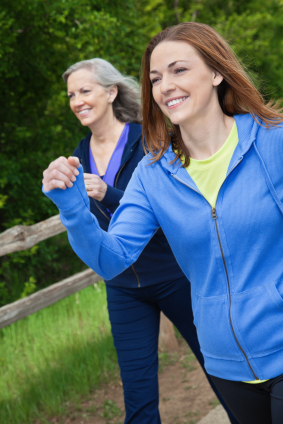
    Benefits of Walking

    After reading this article I decided, even with my bad knees, that I need to start walking more.  I am soon going to have a great looking body and I want to have the time to enjoy it ... so grab your pedometer and join me!!!

    Benefits of Walking -- http://health.yahoo.net/experts/dayinhealth/easiest-way-live-longer
    Did you know that every minute you walk can extend your life by 1.5 to 2 minutes? In addition, many studies show that people who walk regularly live longer, weigh less, have lower blood pressure, and enjoy better overall health than non-walkers.
    Ready to lace on your shoes? If you want to add to the amount of walking you do, just clip on a pedometer. That simple action actually increases your physical activity by over 2100 steps per day, a review that pooled data from 26 studies found.
    Here’s a look at ten benefits of walking.
    Walking Increases Your Lifespan
    Walking more than an hour a day improves life expectancy significantly, a 2011 study showed. The researchers looked at 27,738 participants between the ages of 40 and 79 over a 13-year period. Surprisingly, their lifetime medical costs did not increase—even though they lived longer.
    “An increase in walking time at the population level would bring about a tremendous change in people’s health and medical cost,” the study authors wrote.
    Walking Wards Off Diabetes
    Just thirty minutes of walking a day can prevent diseases such as type 2 diabetes, a 2002 study looking at both overweight and average weight men and women in a population at high risk for the disease showed.
    If you already have diabetes, walking is helpful for you, too. A mile or more daily cuts your risk of death from all causes in half, according to a 2007 study.
    Walking Keeps Your Mind Sharp
    Walking 72 blocks a week (around six to nine miles) helps increase grey matter, which in turn lowers the risk of suffering from cognitive impairment—or trouble with concentration, memory and thought, according to a study which looked at 299 seniors over a nine-year period.
    Furthermore, walking five miles per week can provide some protection to the memory and learning areas of the brains of those already suffering from Alzheimer’s disease or mild cognitive impairment, and lead to a slower decline in memory loss.
    Walking Helps Lower Blood Pressure
    Walking just 30 minutes a day, three to five days a week—even when the 30 minutes are broken into three ten-minute increments—has been found to significantly lower blood pressure.
     Walking is Great for Bone Health
    Putting one foot in front of the other for about a mile a day led to improved bone density in post-menopausal women, and slowed the rate of bone loss from the legs, according to a 1994 study. “It takes walkers four to seven years longer to reach the point of very low bone density, study leader Dr. Krall told the New York Times.
    Walking Cuts the Risk of Stroke
    Walking about 12.5 miles a week or more cut the risk of stroke in half, according to a study looking at over 11,000 Harvard University alumni with an average age of 58.
    Walking Improves Your Mood
    If you’re feeling down in the dumps, walking is a quick and easy solution. Just thirty minutes on a treadmill reduces feelings of tension and depression, according to research published in the British Journal of Sports Medicine. In fact, the study found that walking lifted moods more quickly than anti-depressants did (and with fewer side effects).
    And the more people walk, the better their mood and energy, says California State University Long Beach professor Robert Thayer, based on a study looking at 37 study participants over a 20-day period.
    Walking Torches Calories
    Just 20 minutes of walking a day will burn 7 pounds a year. The effects are even more dramatic when you add in some dietary changes as well.
    Walking Improves Insomnia
    Having trouble sleeping at night? Try taking a brisk 45-minute walk in the morning five days a week, and your sleep may improve significantly, according to research from the Fred Hutchinson Cancer Research Center in Seattle, which looked at women from the age of 50-74. (Walking in the evening, however, sometimes has the opposite effect—so keep an eye on when you’re exercising and what your sleep patterns are.)
    Walking is Good for the Heart
    Women who took brisk walks for three or more hours per week reduced their risk of heart disease by 30-40 percent, according to an analysis of over 72,000 women aged 40-65, who were enrolled in the prospective Nurses’ Health Study. As I reported recently, heart attacks kill more US women than men annually. However, the benefits of walking aren’t limited to one gender. A different study showed that walking can cut the risk of coronary heart disease in half for men between the ages of 71 and 93.